
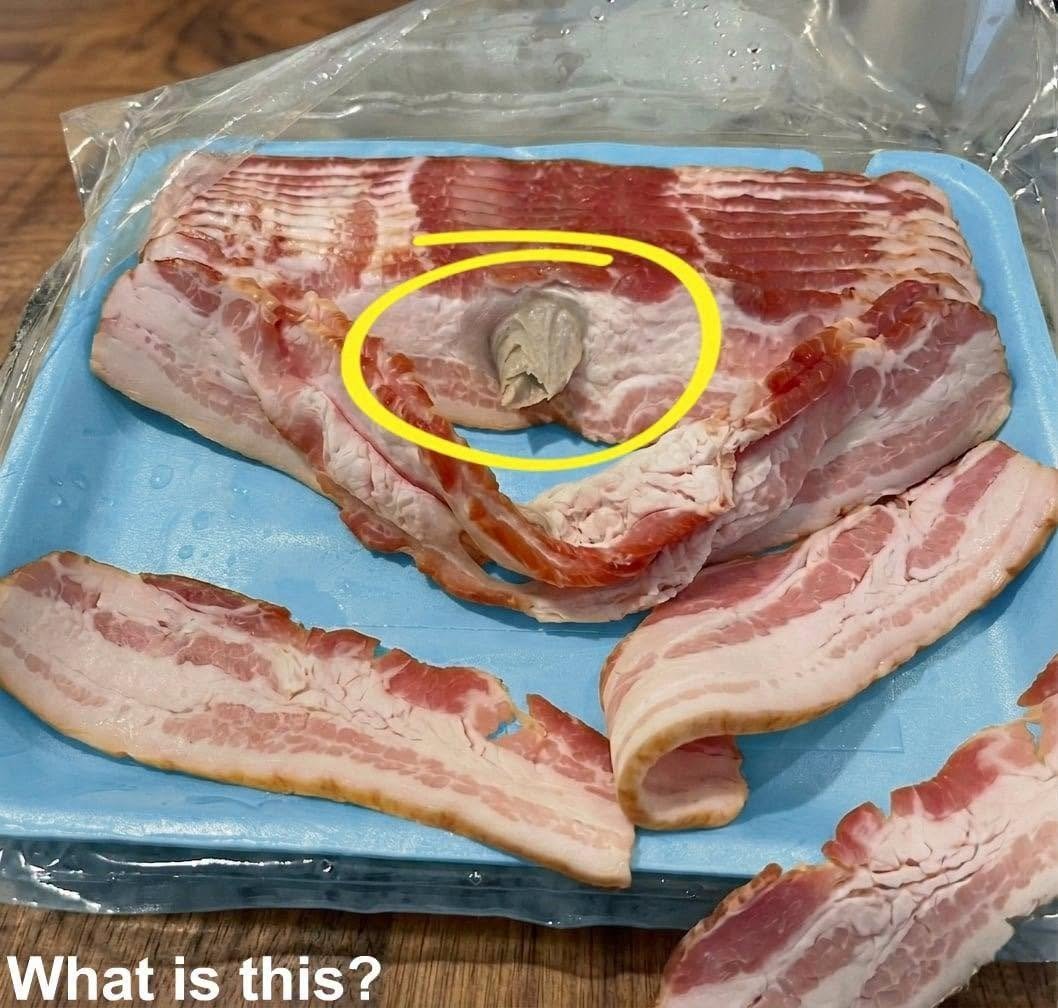
Pause and assess: Take a breath. Is it cartilage (pale, rubbery, flexible) or something else (hard, synthetic, discolored)?
Inspect closely: Use good lighting. Cartilage is typically translucent, flexible, and attached to the meat.
Smell test: Fresh bacon has a mild, smoky, salty aroma. Spoiled bacon smells sour, rancid, or off.
Decide: If it’s cartilage and the bacon otherwise looks/smells fresh, you can:
✅ Trim it off and cook the rest
✅ Cook it anyway (it will soften slightly but remain chewy)
✅ Discard if texture bothers you (no safety risk either way)
Document if needed: If you suspect contamination (not cartilage), photograph the item and packaging, then contact the store and manufacturer.
Cooking Tips for Bacon with Cartilage:
✅ Trim before cooking: Use kitchen shears or a sharp knife to remove cartilage if desired
✅ Cook thoroughly: Bacon should reach 145°F (63°C) internal temperature; cartilage will soften but remain chewy
✅ Crisp it up: Longer cooking can make cartilage slightly more tender, though it won’t become “crispy” like fat
✅ Blend into dishes: If making bacon bits for salads or soups, cartilage will soften further during simmering
🍳 Pro tip: If you frequently find cartilage in your bacon and prefer to avoid it, look for “center-cut” or “lean” bacon varieties, which are trimmed more closely and may have less connective tissue.
🛒 Smart Shopping Tips: How to Choose Quality Bacon
Prevention starts at the grocery store. Here’s how to select bacon with confidence.
What to Look For:
Quality Indicator
Why It Matters
Firm, pink-red color
Indicates freshness; avoid gray, brown, or greenish hues
Minimal liquid in package
Excessive purge (liquid) can indicate improper storage or aging
Intact packaging
No tears, leaks, or bloating (which can signal bacterial growth)
Clear “sell-by” or “use-by” date
Ensures freshness; choose packages with the furthest date
Reputable brand or source
Established brands often have stricter quality control
Types of Bacon & What to Expect:
Type
Characteristics
Cartilage Likelihood
Standard streaky bacon
Cut from pork belly; higher fat content
Moderate—belly area may include some connective tissue
Center-cut bacon
Trimmed from the center of the belly; leaner
Lower—more carefully trimmed
Thick-cut bacon
Sliced thicker; often from premium cuts
Variable—depends on trimming practices
Uncured/no-nitrate bacon
Processed with natural preservatives like celery powder
Same as standard—processing method doesn’t affect cartilage presence
Artisanal/small-farm bacon
Often less processed; may have more natural variation
Slightly higher—less industrial trimming
🌿 Note: “Uncured” doesn’t mean no preservatives—it means natural sources (like celery powder) were used instead of synthetic sodium nitrite. Both are safe when used properly.
🍽️ Healthy Eating & Meal Prep: Making the Most of Your Bacon
Bacon can be part of a balanced diet when enjoyed mindfully.
Smart Ways to Include Bacon:
Strategy
Benefit
Use as a flavor accent
Crumble a small amount into salads, soups, or veggie dishes for savory depth without excess sodium/fat
Pair with nutrient-dense foods
Balance bacon with vegetables, whole grains, and lean proteins for a balanced meal
Choose lower-sodium options
Reduces sodium intake while keeping flavor
Cook until crisp
Renders more fat, reducing overall fat content in the final dish
Blot excess grease
Il resto è nella pagina successiva
