
Use paper towels to absorb rendered fat before serving
Meal Prep Tips:
✅ Pre-cook and freeze: Cook bacon ahead, drain well, and freeze in portions for quick additions to meals
✅ Store properly: Keep unopened bacon in the fridge; use within 7 days of opening, or freeze for longer storage
✅ Repurpose leftovers: Use cooked bacon in frittatas, grain bowls, or pasta dishes to reduce waste
✅ Portion control: Pre-portion bacon before cooking to avoid over-serving
🥗 Balance reminder: Bacon is delicious, but it’s high in sodium and saturated fat. Enjoy it as an occasional accent—not a daily staple—as part of an overall nutrient-rich diet.
❓ Frequently Asked Questions
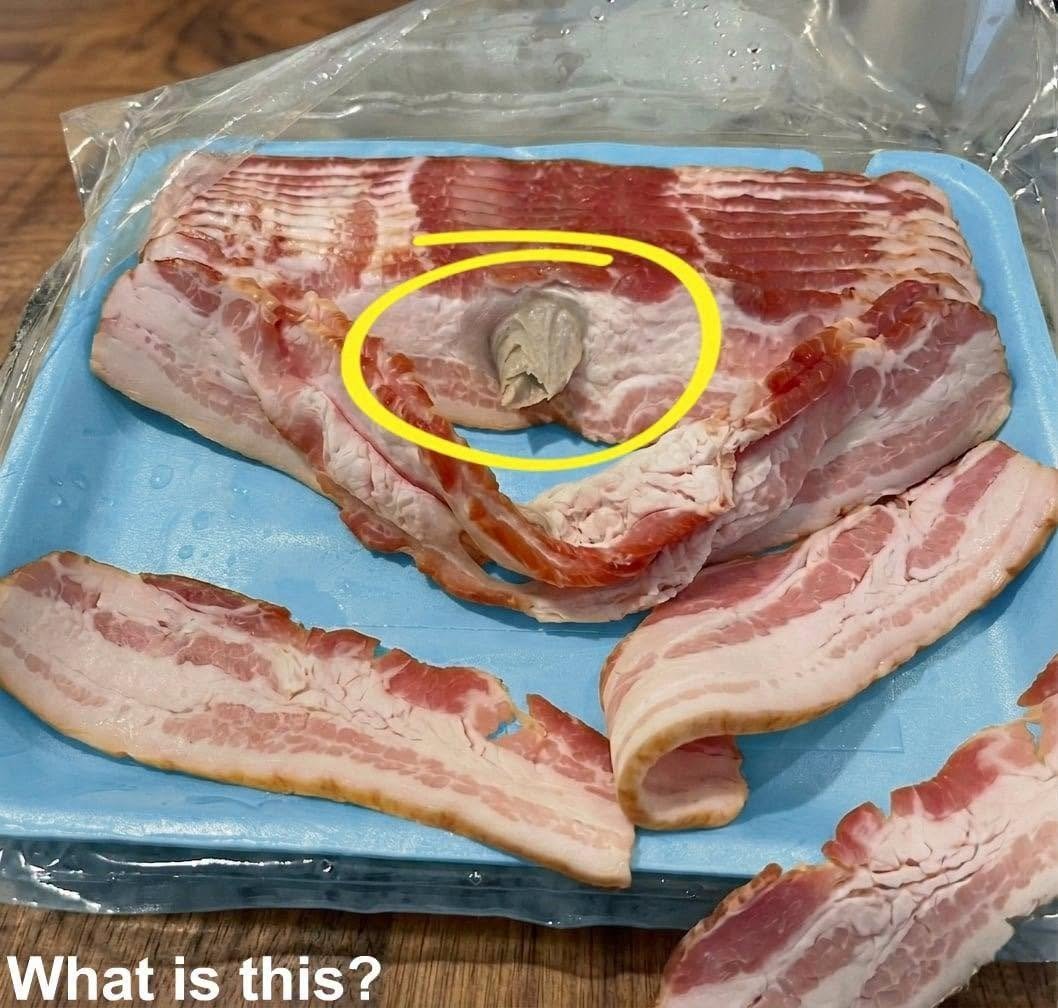
Q: Is cartilage in bacon a sign of poor quality?
A: No. Cartilage is a natural part of animal anatomy. Its presence reflects minimal processing, not poor quality. Many premium, artisanal bacons may actually have more natural variation.
Q: Can I eat bacon if I find cartilage?
A: Yes. Cartilage is safe and edible. If the texture bothers you, trim it off before cooking. The rest of the bacon is fine to eat if it looks and smells fresh.
Q: How do I tell cartilage apart from plastic or contamination?
A: Cartilage is flexible, translucent, and attached to the meat. Plastic is rigid, opaque, and feels synthetic. If you’re unsure, contact the store or manufacturer with photos.
Q: Does cooking destroy cartilage?
A: Cooking softens cartilage but doesn’t dissolve it. It will remain chewy but is still safe to eat.
Q: Is cartilage nutritious?
A: Cartilage contains collagen, which some people consume for joint health. However, the amount in a small piece of bacon is minimal. Don’t rely on bacon as a collagen source.
Q: Should I return bacon that contains cartilage?
A: No—cartilage is natural and expected in minimally processed meat. Only return bacon if you suspect actual contamination (plastic, metal, etc.) or spoilage.
Q: Can children eat bacon with cartilage?
A: Yes, if the bacon is otherwise fresh and properly cooked. For young children, you may want to trim cartilage for texture preferences, not safety.
Q: Does organic bacon have less cartilage?
A: Not necessarily. Organic refers to farming practices (no synthetic pesticides, antibiotics, etc.), not trimming standards. Cartilage presence depends on butchering, not certification.
Q: How can I reduce the chance of finding cartilage?
A: Choose center-cut or pre-trimmed bacon varieties. However, some natural variation is normal and not a cause for concern.
Q: What if I accidentally eat cartilage?
A: Nothing to worry about. It’s digestible and harmless. You might notice a chewy texture, but it poses no health risk.
🧭 The Bottom Line
Finding a pale, rubbery chunk in your bacon is usually just cartilage—a natural, harmless part of animal anatomy.
Remember:
🥓 Cartilage is safe, edible, and common in minimally processed meats
🔍 Inspect bacon for freshness: color, smell, packaging integrity
✂️ Trim cartilage if desired, but don’t waste good bacon over normal variations
🛒 Choose quality bacon from reputable sources; understand what different cuts offer
🥗 Enjoy bacon mindfully as part of a balanced, nutrient-rich diet
You don’t need to fear your food.
You just need knowledge.
And with that knowledge, you can cook with confidence, waste less, and enjoy your meals without unnecessary worry.
So the next time you open a package of bacon and spot something unusual:
Pause.
Look closely.
Ask questions.
And remember: sometimes, the most surprising discoveries teach us the most about where our food comes from—and how to handle it with care.
Have you ever found something unexpected in your food? How did you handle it? Share your experiences and tips respectfully in the comments below.
Il resto è nella pagina successiva
