
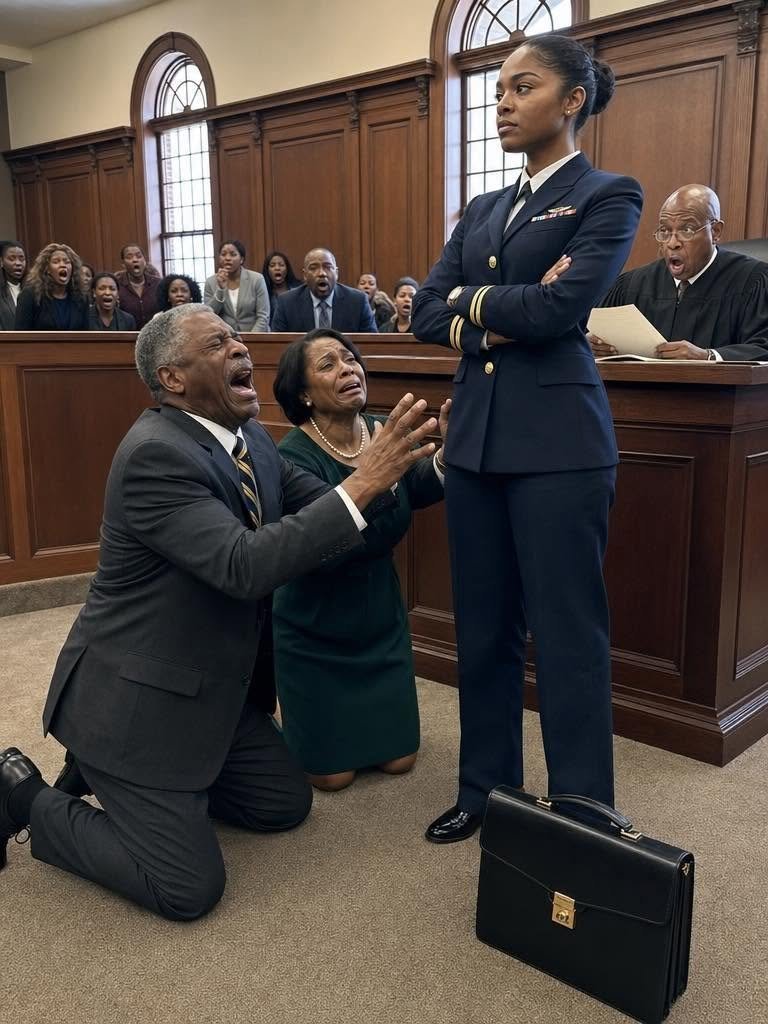
Mr. Henderson turned the page. “To my granddaughter, Elena Vance, I leave the residue of my estate, including all real estate holdings, investment accounts, and liquid assets, totaling approximately four million seven hundred thousand dollars.”
The silence that followed was so heavy it felt as though the oxygen had been sucked out of the room.
Then came the explosion.
”This is a mistake!” my father roared, jumping to his feet, his face turning crimson. “Four million seven hundred thousand? To her? She barely even visited!”
”I visited every weekend, Dad,” I said softly, my voice level. “I drove four hours every Friday night. I just didn’t post it on Facebook.”
My mother spun around and glared at me, her eyes slitted with malice. “You manipulated her! You took advantage of a senile old woman! You probably withheld her medication until she signed that!”
”Nana Rose was of perfectly sound mind until the very end, Mrs. Vance,” Mr. Henderson cut in sharply. “I videotaped the signing session. She was very clear about her reasons.”
”This is fraud!” my father bellowed, slamming his fist on the desk. “We are her children! We are the rightful heirs! Elena… she’s nothing! She’s a ghost! She has no life, no career, nothing to show for thirty-two years on this earth!”
I sat perfectly still. I didn’t defend myself. I didn’t mention my rank. I didn’t bring up the medals sitting in my drawer. I had learned long ago that to my parents, unless you were on the cover of a magazine or driving a Porsche, you didn’t exist.
”We’re going to fight this,” my mother hissed at me, grabbing her purse. “Don’t think you’re keeping a single cent, Elena. We will take it back. We will sue you until you are ruined.”
”Do what you have to do,” I said.
They stormed out, leaving a trail of expensive perfume and fury in their wake.
Three days later, a process server knocked on my apartment door. I signed for the envelope.
Plaintiffs: Robert and Linda Vance.
Defendant: Elena Vance.
Cause of Action: Undue influence, fraud, and mental incapacity.
I looked at the summons. I looked at the date. I looked at my framed Juris Doctor degree and the commission from the President of the United States hanging on my wall.
I didn’t call a lawyer. I didn’t panic. I went into my kitchen, brewed a cup of coffee, and opened my laptop. I created a new folder. I named it “Operation Inheritance.”
The hallway of the district courthouse bustled with the usual morning chaos: lawyers bartering, clients crying, bailiffs shouting names.
I arrived fifteen minutes early. I wore a charcoal grey suit—professional, yes, but off-the-rack, nothing tailored. My hair was pulled back into a tight, sensible bun. I carried nothing but a single, thin manila folder.
My parents arrived five minutes later. They looked like they were attending a gala. My mother wore a Chanel suit; my father, a custom-tailored Italian wool suit. Beside them stood Mr. Sterling, a lawyer known around town for two things: his billboards along the highway and his aggressive, cutthroat tactics.
They spotted me sitting on a bench near the courtroom doors.
”You can still settle this, Elena,” my father said, walking over and adjusting his silk tie with a smug grin. He smelled of whiskey and mints. “We’re being generous. Give us 80%, keep the rest as a fee for… whatever services you provided. We’ll drop the fraud charges. Otherwise, we’re going to strip you bare in there.”
”I’m good, thank you,” I said, not looking up from the floor.
Mr. Sterling stepped forward, looking down his nose at me with a patronizing smirk. “Ms. Vance, I understand you haven’t retained counsel. Representing yourself is a terrible idea in an estate case of this magnitude. I will tear you to pieces. The judge will have no patience for an amateur.”
I observed Sterling. I noticed his suit was expensive, but his briefcase was messy, papers sticking out. I noticed the coffee stain on his cuff. Sloppy.
”I’ll take my chances,” I said quietly.
My mother scoffed, looping her arm through my father’s. “She’s always been stubborn. And stupid. Let’s go, Robert. Let the judge humiliate her. Maybe then she’ll learn her place.”
”She doesn’t deserve a dime,” my father said loudly, making sure the others in the hallway heard him. He didn’t realize that in a courtroom, deserving means nothing. Proving means everything.
They swept past me into the courtroom, laughing.
I waited a beat, took a deep breath, and followed them in.
The courtroom was old, smelling of wood wax and history. Judge Halloway sat on the bench—a stern woman with graying hair and piercing eyes.
”Case number 4029, Vance versus Vance,” the bailiff announced.
Mr. Sterling stood up smoothly. “Ready for the plaintiff, Your Honor.”
”Ready for the defense,” I said, remaining seated.
Judge Halloway looked down over her glasses at me. “Ms. Vance, you are representing yourself?”
”Yes, Your Honor.”
”Are you certain? Mr. Sterling is a seasoned litigator. The court cannot give you legal advice.”
”I understand, Your Honor. I am ready to proceed.”
My father leaned over to my mother and whispered, loudly enough for me to hear, “Look at her. She has nothing. No binders, no paralegals. Just a folder. This will be wrapped up by noon.”
”Opening statements,” Judge Halloway ordered.
Mr. Sterling walked to the center of the room. He didn’t use the podium; he liked to pace.
”Your Honor,” he began, his voice deep and theatrical. “This is a case of elder abuse, pure and simple. What we have here is a loving son and daughter-in-law, disinherited by a manipulative, estranged granddaughter. The defendant, Elena Vance, is a woman with a checkered past. Unemployed. Drifting. She took advantage of Rose Vance’s dementia. She isolated her. She whispered lies into her ear. And in Rose’s final days, cloaked in confusion, Elena forced her to sign a document she couldn’t possibly understand.”
He pointed a dramatic finger at me. “We ask this court to right this terrible wrong and return the inheritance to the rightful heirs.”
I sat impassively. I didn’t object. I didn’t shake my head. I let him paint his picture.
”Ms. Vance?” the judge asked. “Your opening statement?”
I stood up. “The defense maintains the will is valid, Your Honor. The burden of proof lies with the plaintiff. I will wait to see their evidence.”
Sterling smirked. He thought I didn’t know how to deliver an opening. He didn’t realize I was saving my ammunition.
The plaintiffs’ case was a masterclass in fabrication.
My mother testified first. She cried on cue. She told stories of her deep closeness with Nana Rose—stories I knew were lies, because I was the one who held Nana’s hand while she cried on holidays because her son hadn’t called.
”She has no career to speak of,” my mother testified, dabbing at a dry eye. “Elena disappears for months at a time. We don’t know where she goes. She has no stability. She clearly needed the money and coerced my mother into signing this will. It was desperation.”
”Thank you, Mrs. Vance,” Sterling said smoothly. He turned to me with a shark-like grin. “Your witness.”
I stood up. “No questions at this time, Your Honor.”
A murmur of confusion went through the courtroom. My mother looked insulted that I hadn’t fought back. Judge Halloway frowned.
”Ms. Vance, are you sure? This testimony is damaging.”
”I am sure, Your Honor.”
My father testified next. He was more aggressive.
”My mother was senile,” he stated. “She didn’t know what day it was. Elena took advantage of that. Elena has always been the black sheep of the family. She’s… odd. Anti-social. She couldn’t hold down a job at a fast-food joint, let alone manage an estate…”
”And did you visit your mother often?” Sterling asked.
”As often as possible,” my father lied smoothly. “But Elena blocked us! She changed the locks!”
I wrote a note on my legal pad. Perjury count #1: The nursing home changed the locks, not me.
”Your witness,” Sterling said.
”No questions, Your Honor,” I repeated.
My father glared at me with contempt as he stepped down. He thought I was paralyzed with fear. He thought his presence, his suit, his loud voice intimidated me. He didn’t know I was simply letting them log their lies into the official record. In a deposition, lies are trouble. At trial, lying is a crime.
Sterling called a “medical expert”—a doctor who had never met Nana Rose but had reviewed her charts “for a fee.” He testified that given her age, she must have been highly suggestible.
”The defendant likely utilized emotional manipulation techniques,” the doctor speculated.
”No questions,” I repeated.
By the time Sterling rested his case, the sun was high. The narrative they built was devastating: I was a broke, manipulative, unemployed failure who stole a fortune from a confused old lady and her loving family.
”The plaintiff rests,” Sterling said, snapping a binder shut. “The evidence is clear, Your Honor. The defendant is unfit. The will is a product of coercion.”
Judge Halloway sighed and rubbed her temples. She looked at me with a mix of pity and annoyance.
”Ms. Vance,” she said, “it is your turn. Do you have… anything? Witnesses? Documents? Or should I make my ruling now based on the uncontested testimony we’ve heard?”
My father leaned back in his chair, arms crossed. He winked at my mother. It was over. They had won.
I stood up slowly. I picked up the thin manila folder from the table.
”I have no witnesses, Your Honor,” I said. “I have only one document.”
”One document?” Sterling chuckled. “A letter of apology?”
”No,” I replied. “It’s my personnel file.”
I walked over to the bailiff and handed him the folder. He carried it up to the bench.
The room was quiet except for the hum of the AC. My parents were whispering about what restaurant they were going to for their celebratory dinner.
Judge Halloway opened the folder. She adjusted her glasses. She frowned. Then her eyes narrowed.
She turned the first page. Then the second.
She looked up at me, her eyes wide. She looked back down at the file, as if double-checking to make sure she wasn’t hallucinating.
”Ms. Vance…” the judge began, her voice different now. Curious. Sharp. “This document… this is a certified service record from the Department of Defense?”
”Yes, Your Honor,” I replied.
”And…” She paused, reading the line again. “It states here that you are currently stationed at Fort Belvoir?”
”Yes, Your Honor. I am currently on leave to handle this family matter.”
”And your rank is…” Judge Halloway paused again. She looked at me, really looked at me, seeing past my plain suit for the first time. “Major?”
”Yes, Your Honor. Major Elena Vance.”
My father let out a confused chuckle. “Major? Major of what? The Salvation Army?”
Judge Halloway ignored him. She kept reading. “And your military occupational specialty…”
She stopped. She looked at Mr. Sterling. Then she looked at my parents. Then she looked at me.
”You are a JAG officer?”
A dead, suffocating silence fell over the room.
”Yes, Your Honor,” I said, my voice crisp, carrying to the back of the room. I dropped the soft-spoken daughter persona and adopted the tone I used when briefing generals. “I am a Senior Trial Counsel for the United States Army Judge Advocate General’s Corps. I prosecute war crimes, procurement fraud, and treason. I have been practicing law for seven years.”
My father’s grin froze. It didn’t disappear; it just stayed stuck there like a grotesque mask of confusion.
Mr. Sterling dropped his pen. It clattered loudly against the floor.
”I have never been unemployed in my life,” I continued, addressing the judge while looking at my parents. “The months I disappeared were deployments to Iraq and Germany. The reason my parents never knew of a glittering career is because my work is often classified, and frankly, they never bothered to ask.”
Judge Halloway sat back. The pity was gone, replaced by a look of absolute disbelief directed at the plaintiffs’ table.
”Mr. Sterling,” Judge Halloway said, her voice dropping to a freezing temperature. “You just spent three hours telling me this woman is an incompetent vagrant. You told me she doesn’t understand legal documents. You told me she’s a black sheep with no stability.”
Sterling stood up, stammering. “I… Your Honor… my clients informed me… I had no idea…”
”You are suing a decorated military prosecutor for undue influence?” the judge demanded, gesturing to the file. “A woman who drafts wills for soldiers deploying into combat zones? A woman who understands the definition of sound mind better than anyone else in this room?”
”We… we didn’t know,” my mother whispered, clutching her pearls. “She never told us.”
”Because you were too busy telling me I was nothing to ever ask,” I interjected.
I turned to Mr. Sterling. “Counselor,” I said calmly. “You just allowed your clients to commit perjury on the record. Your father testified I changed the locks on the house. In that file, you will find an affidavit from the nursing home director stating they changed the locks because my father attempted to break in while intoxicated and aggressive two years ago.”
Sterling went pale. He looked at my father in horror.
”My mother testified I had no income,” I continued. “My tax returns are in that file. I draw a government salary. I had no financial motive to coerce my grandmother. My parents, however…”
I walked back to my table and picked up a sheet of paper I hadn’t submitted yet.
”I ask the court’s permission to cross-examine the plaintiff, Robert Vance, now that his credibility has been shot to pieces.”
Judge Halloway nodded, a slight smirk playing on her lips. “Permission granted. Mr. Vance, take the stand.”
My father walked to the witness box like a man walking to the gallows. He didn’t look at me. He stared at his lawyer, but Sterling was busy shuffling through his messy briefcase, looking for an exit.
”Mr. Vance,” I said, standing in the well of the court. I didn’t need notes. “You testified earlier that you wanted to overturn this will to ‘protect the family legacy.’ Is that correct?”
”Yes,” he muttered. “It’s the principle of the thing.”
”Is it also the principle of the thing that you currently owe 1.2 million dollars to various casinos in Atlantic City?”
”Objection!” Sterling yelled weakly. “Relevance?”
”Goes to motive, Your Honor,” I said, never taking my eyes off my father. “The plaintiffs claim I needed the money. I am demonstrating that they are in desperate financial straits.”
”Overruled,” the judge said. “Answer the question, Mr. Vance.”
My father was sweating through his expensive wool suit. “I… I have debts. Everyone has debts.”
”Do you have a second mortgage on your home that is currently in foreclosure?” I asked.
”I… maybe.”
”And was Nana Rose aware of this debt?”
”I don’t know.”
”She was,” I said. “Because I told her. After she received a call from a collection agency looking for you.”
I stepped closer. “Dad, Nana Rose didn’t leave me the money because I tricked her. She left it to me to protect it from you. She knew if you got your hands on her life’s savings, it would be gone in a month at the blackjack tables.”
My father looked around the empty jury box, then at the judge. He deflated.
”We needed the money,” he whispered. “We’re going to lose the house.”
”So you decided to frame your daughter for fraud,” I said. “You decided to drag my reputation through the mud, call me a failure, a vagrant, a thief… all to cover for your own mistakes.”
Il resto è nella pagina successiva
