
No chlorine.
No reheated soup.
Air.
That week I went to the center of Coyoacán.
Alone.
I sat down in front of the fountain, bought a corn on the cob with chili that I used to avoid because Esteban was bothered by the smell, and got some on my blouse.
I laughed.
Nobody scolded me.
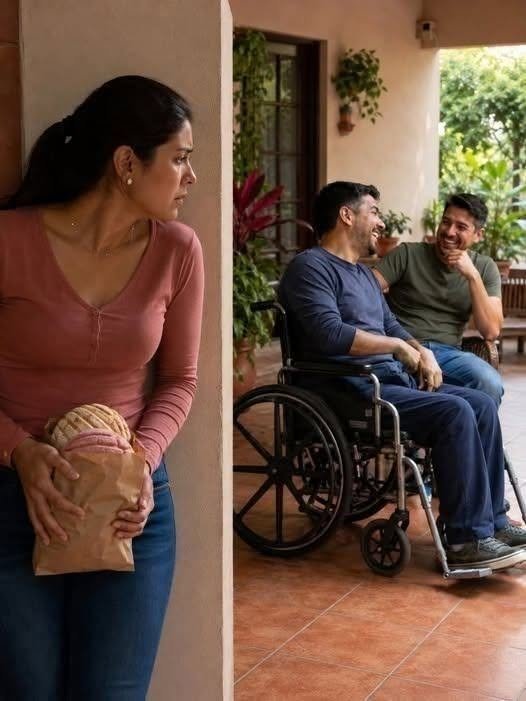
Then I went into a bakery and bought a vanilla concha.
Not for him.
For me.
I bit her while walking slowly through the square, seeing couples, vendors, balloons, children running after bubbles.
I thought about the road to Cuernavaca, about the accident, about the woman I was before and after.
For years, everyone told me about Esteban’s tragedy.
Nobody asked me about mine.
Mine didn’t show up on x-rays.
He didn’t need a wheelchair.
But it also immobilized me.
The legal process lasted months.
The false power was annulled.
My participation in the house and in the assets acquired during the marriage was acknowledged.
The hidden accounts came to light.
The deposits to Tomás too.
Esteban had to pay for professional care, medications, and debts he had hidden while I sold clothes to fill the pantry.
I didn’t keep everything.
It was never about that.
I kept what was mine.
That, after five years of feeling borrowed, felt like a blessing.
Tomás appeared one last time.
He arrived without shouting.
Without a hat.
Without arrogance.
—My dad told me he can’t help me anymore.
-I know.
—He also told me it was your fault.
-Sure.
He stood still in the entrance.
—I found the audio recordings.
I looked at him.
-Which is it?
—The ones he sent to his friends. Talking about you. About me. About everyone.
Her face was pale.
—He used me too.
I didn’t say “I told you so.”
It wouldn’t have done him any good.
-I’m sorry.
Tomás lowered his gaze.
—I was an idiot to you.
-Yeah.
-Sorry.
The word arrived late, but it arrived.
“I don’t know what to do with that apology,” I replied. “But I don’t wish you ill.”
He nodded.
—Can I bring you clothes downtown?
—Yes. Coordinate it with the administration. Not with me.
He understood.
Il resto è nella pagina successiva
